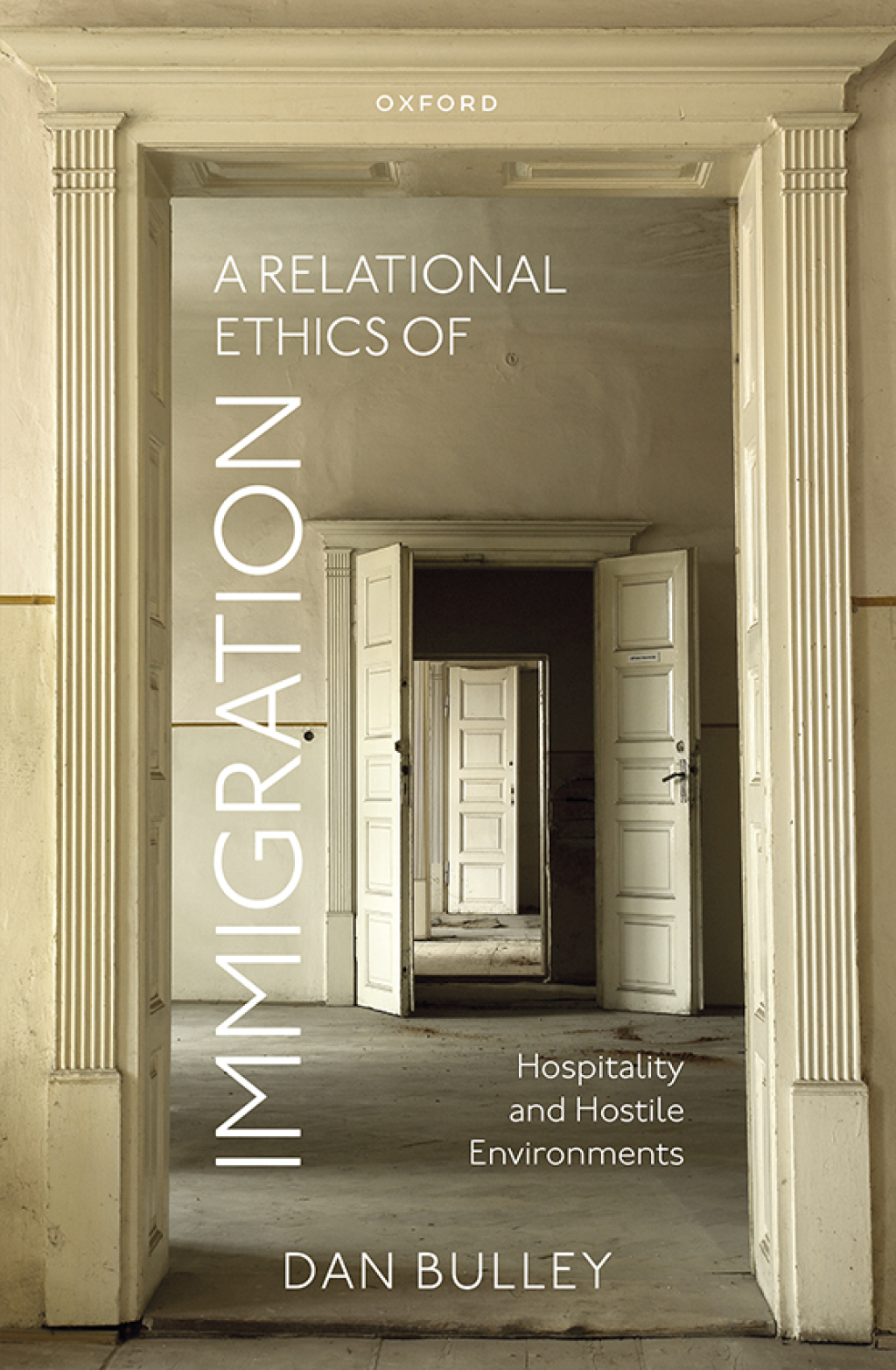
A Relational Ethics of Immigration Hospitality and Hostile Environments 1st Edition – PDF/EPUB Version Downloadable

Author(s): Dan Bulley
Publisher: OUP Oxford
ISBN: 9780192890009
Edition: 1st Edition

$49,99

Delivery: This can be downloaded Immediately after purchasing.
Version: Only PDF Version.
Compatible Devices: Can be read on any device (Kindle, NOOK, Android/IOS devices, Windows, MAC)
Quality: High Quality. No missing contents. Printable

Recommended Software: Check here

Important: No Access Code

Description

To understand the ethics of immigration, we need to start from the way it is enacted and understood by everyday actors: through practices of hospitality and hostility. Drawing on feminist and poststructuralist understandings of ethics and hospitality, this book offers a new approach to immigration ethics by exploring state and societal responses to immigration from the Global North and South. Rather than treating ethics as a determinable code for how we ought to behave toward strangers, it explores hospitality as a relational ethics — an ethics without moralism — that aims to understand and possibly transform the way people already do embrace and deflect obligations and responsibilities to each other. Building from specific examples in Colombia, Turkey and Tanzania, as well as the EU, US and UK, hospitality is developed as a structural and emotional practice of drawing and redrawing boundaries of inside and outside, belonging and non-belonging. It thereby actively creates a society as a communal space with a particular ethos: from a welcoming home to a racialised hostile environment. Hospitality is therefore treated as a critical mode of reflecting on how we create a ‘we’ and relate to others through entangled histories of colonialism, displacement, friendship and exploitation. Only through such a reflective understanding can we seek to transform immigration practices to better reflect the real and aspirational ethos of a society. Instead of simple answers — removing borders or creating global migration regimes — the book argues for grounded negotiations that build from existing local capacities to respond to immigration.