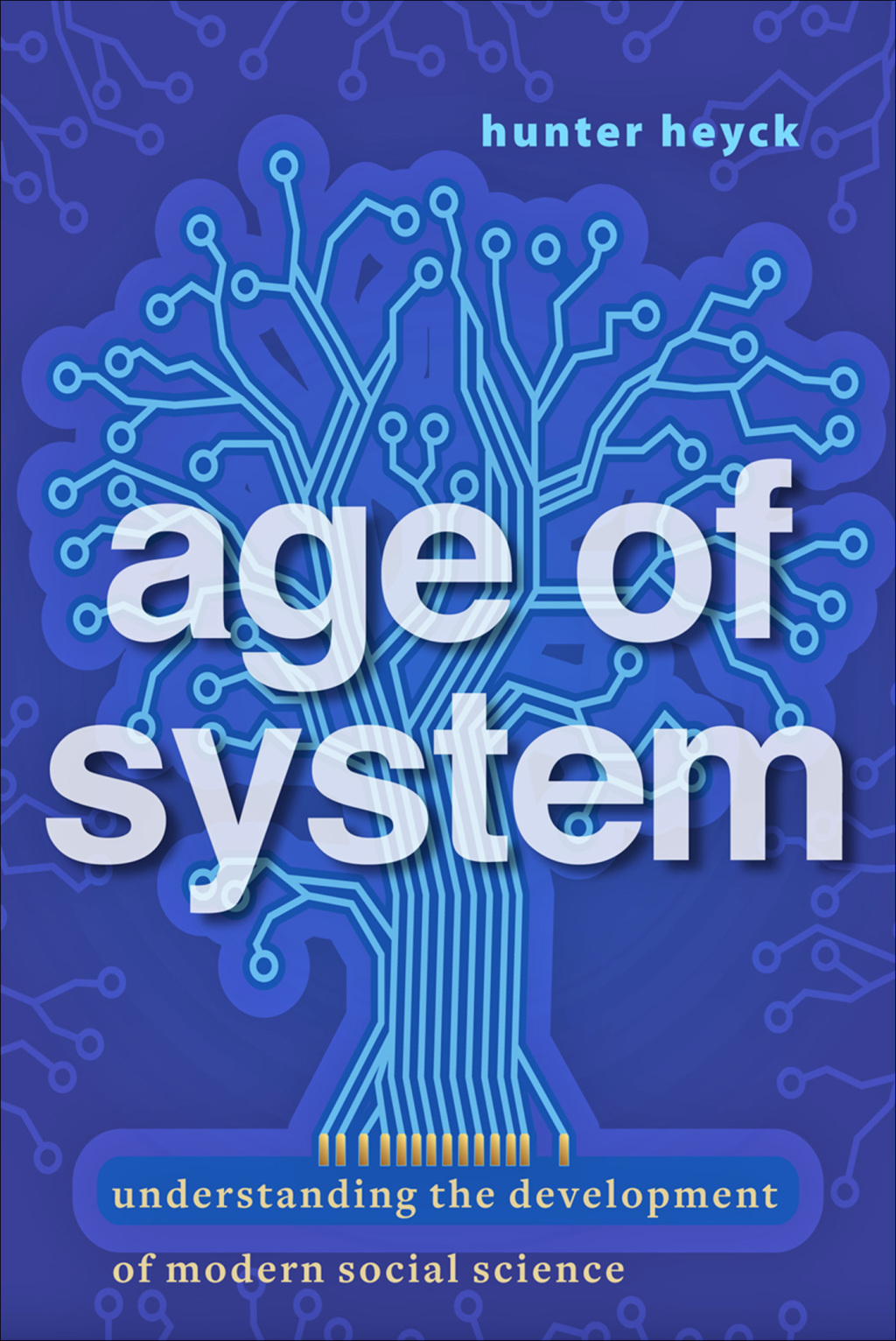
Age of System Understanding the Development of Modern Social Science – PDF/EPUB Version Downloadable

Author(s): Hunter Heyck
Publisher: JHUP
ISBN: 9781421417103
Edition:

$49,99

Delivery: This can be downloaded Immediately after purchasing.
Version: Only PDF Version.
Compatible Devices: Can be read on any device (Kindle, NOOK, Android/IOS devices, Windows, MAC)
Quality: High Quality. No missing contents. Printable

Recommended Software: Check here

Important: No Access Code

Description

Before the Second World War, social scientists struggled to define and defend their disciplines. After the war, “high modern” social scientists harnessed new resources in a quest to create a unified understanding of human behavior—and to remake the world in the image of their new model man.

In Age of System, Hunter Heyck explains why social scientists—shaped by encounters with the ongoing “organizational revolution” and its revolutionary technologies of communication and control—embraced a new and extremely influential perspective on science and nature, one that conceived of all things in terms of system, structure, function, organization, and process. He also explores how this emerging unified theory of human behavior implied a troubling similarity between humans and machines, with freighted implications for individual liberty and self-direction.

These social scientists trained a generation of decision-makers in schools of business and public administration, wrote the basic textbooks from which millions learned how the economy, society, polity, culture, and even the mind worked, and drafted the position papers, books, and articles that helped set the terms of public discourse in a new era of mass media, think tanks, and issue networks. Drawing on close readings of key texts and a broad survey of more than 1,800 journal articles, Heyck follows the dollars—and the dreams—of a generation of scholars that believed in “the system.” He maps the broad landscape of changes in the social sciences, focusing especially intently on the ideas and practices associated with modernization theory, rational choice theory, and modeling. A highly accomplished historian, Heyck relays this complicated story with unusual clarity.