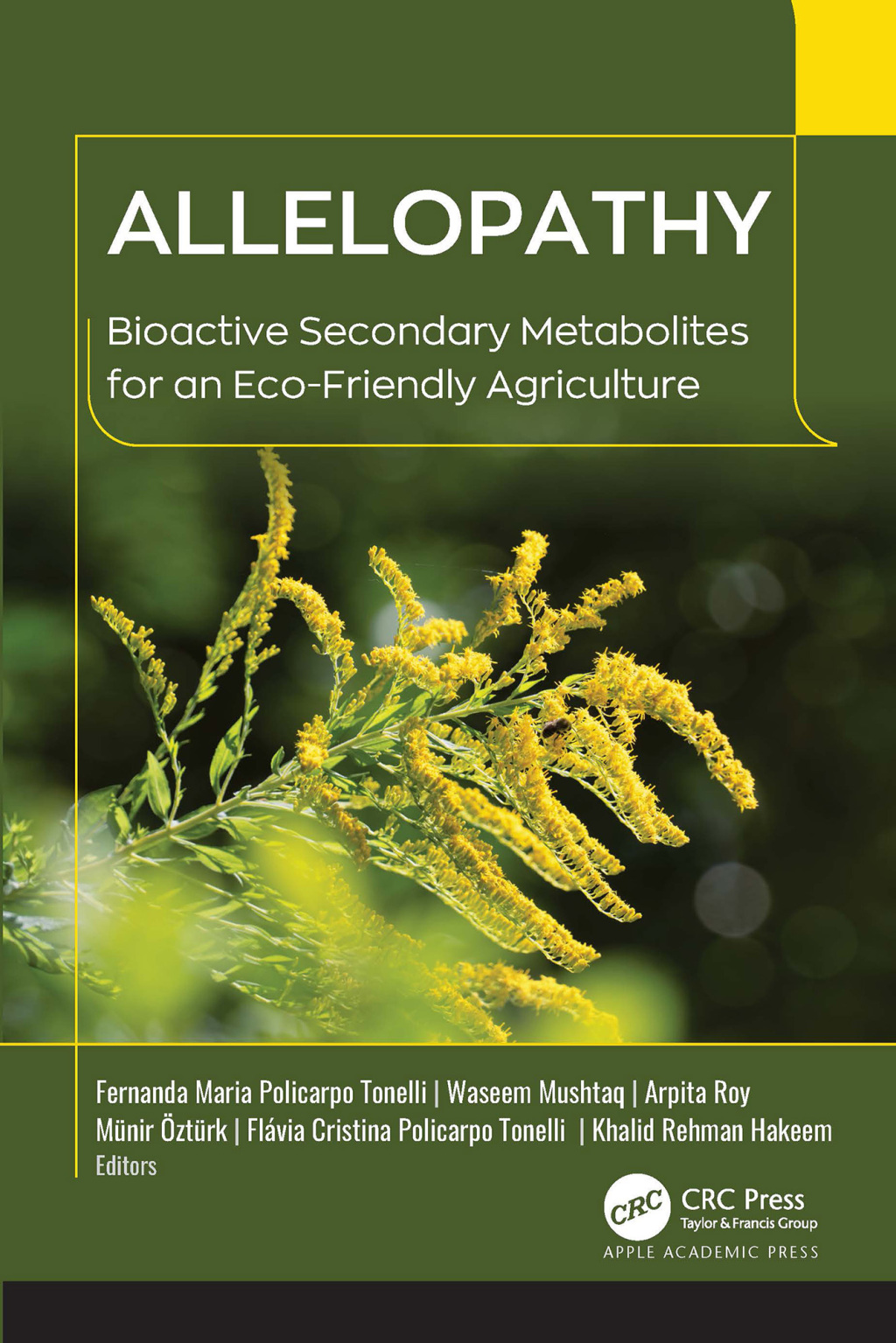
Allelopathy Bioactive Secondary Metabolites for an Eco-Friendly Agriculture 1st Edition – PDF/EPUB Version Downloadable
Author(s):
Publisher: Apple Academic Press (T&F)
ISBN: 9781774919187
Edition: 1st Edition
$49,99
Delivery: This can be downloaded Immediately after purchasing.
Version: Only PDF Version.
Compatible Devices: Can be read on any device (Kindle, NOOK, Android/IOS devices, Windows, MAC)
Quality: High Quality. No missing contents. Printable
Recommended Software: Check here

Important: No Access Code
Description
Allelopathy is a field that can play a major role in containing environmental pollution through providing viable alternatives to synthetic pesticides and contributing to sustainable agriculture. Allelochemicals have the ability to contribute to inhibiting pest damage to crops, to promote weed control, and to help in creating a desirable plant-microbes interaction in soil that improves soil nutrition systems. This new volume provides a brief history of allelopathy and goes on to explore its importance in environmental health and sustainable agriculture, discussing allelopathy from a biotechnological point of view. A combination of review and research chapters written by experts from around the globe, this volume reviews synthetic pesticides and the environmental pollution associated with them and also looks at allelochemicals as useful bioactive secondary metabolites. It discusses allelopathy induction in crops by natural selection, the main pathways involved in allelochemical production, and plant breeding in allelopathy. The volume also considers the theme of allelopathy and agricultural sustainability, covering plant-based anthelmintic as a new trend to combat helminth infections, the role of microorganisms, the application of allelochemicals against phytopathogens, the role of nanoparticles on fenugreek growth, biotic and salinity stress alleviation in fenugreek, and more. It also reviews genetic engineering approaches to allelopathy. Several chapters discuss the allelopathic potential of specific crops, such as Leucaena leucocephala, Smilax brasiliensis Sprengel (Smilacaceae), and Solanum lycocarpum A. St. -Hil. (Solanaceae). Offering a valuable overview of allelochemicals as important eco-friendly tools for sustainable agriculture, this volume provides useful information for research scientists, agricultural and botany professionals, as well as faculty and students in the fields of allelopathy, environmental sciences, agriculture, and biotechnology.