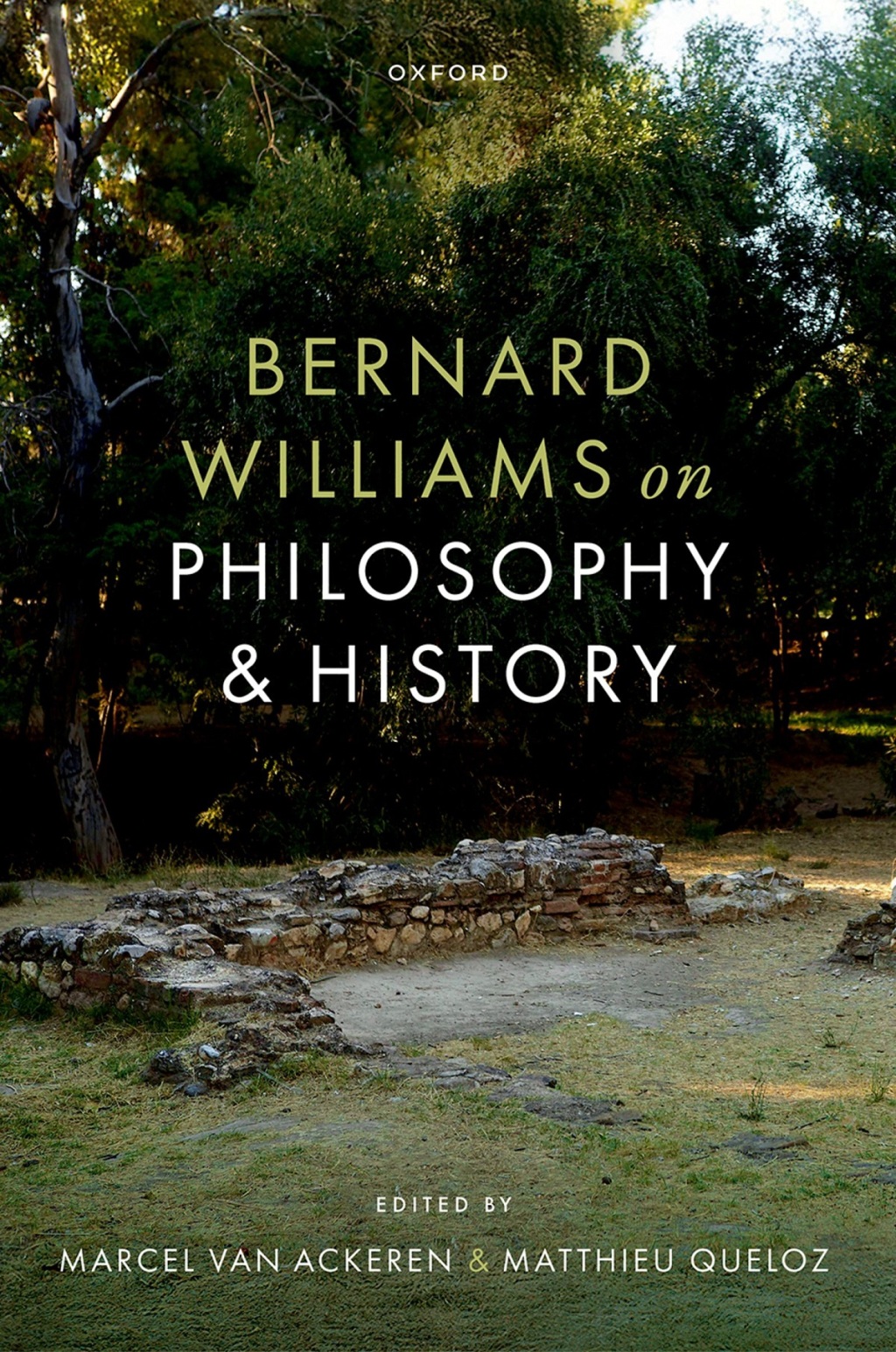
Bernard Williams on Philosophy and History 1st Edition – PDF/EPUB Version Downloadable

Author(s): Marcel van Ackeren, Matthieu Queloz
Publisher: OUP Oxford
ISBN: 9780192870063
Edition: 1st Edition

$49,99

Delivery: This can be downloaded Immediately after purchasing.
Version: Only PDF Version.
Compatible Devices: Can be read on any device (Kindle, NOOK, Android/IOS devices, Windows, MAC)
Quality: High Quality. No missing contents. Printable

Recommended Software: Check here

Important: No Access Code

Description

For Bernard Williams, philosophy and history are importantly connected. His work exploits this connection in a number of directions: he believes that philosophy cannot ignore its own history the way science can; that even when engaging with philosophy’s history primarily to produce history, one needs to draw on philosophy; and that when doing the history of philosophy primarily to produce philosophy, one still needs a sense of how historically distant past philosophers are, because the point of reading them is to confront something different from the present. But Williams also holds that systematic philosophy itself needs to be done historically, engaging not just with its own history, but with that of the concepts it seeks to understand.

To explore these different ways in which philosophy and history intertwine, this volume assembles specially commissioned contributions by A. W. Moore, Terence Irwin, Sophie-Grace Chappell, Catherine Rowett, Marcel van Ackeren, John Cottingham, Gerald Lang, Lorenzo Greco, Paul Russell, Carla Bagnoli, Peter Kail, David Owen, Giuseppina D’Oro, James Connelly, Matthieu Queloz, Nikhil Krishnan, John Marenbon, Ralph Wedgwood, Garrett Cullity, Hans-Johann Glock, Geraldine Ng, Ilaria Cozzaglio, Amanda R. Greene, and Miranda Fricker. They critically appraise Williams’s work in and on the history of philosophy as well as his ‘historicist turn’ and his use of genealogy.

The collection uniquely combines substantive discussions of historical figures from Homer to Wittgenstein with methodological discussions of how and why the history of philosophy should be done, and how and why philosophy should draw on history.