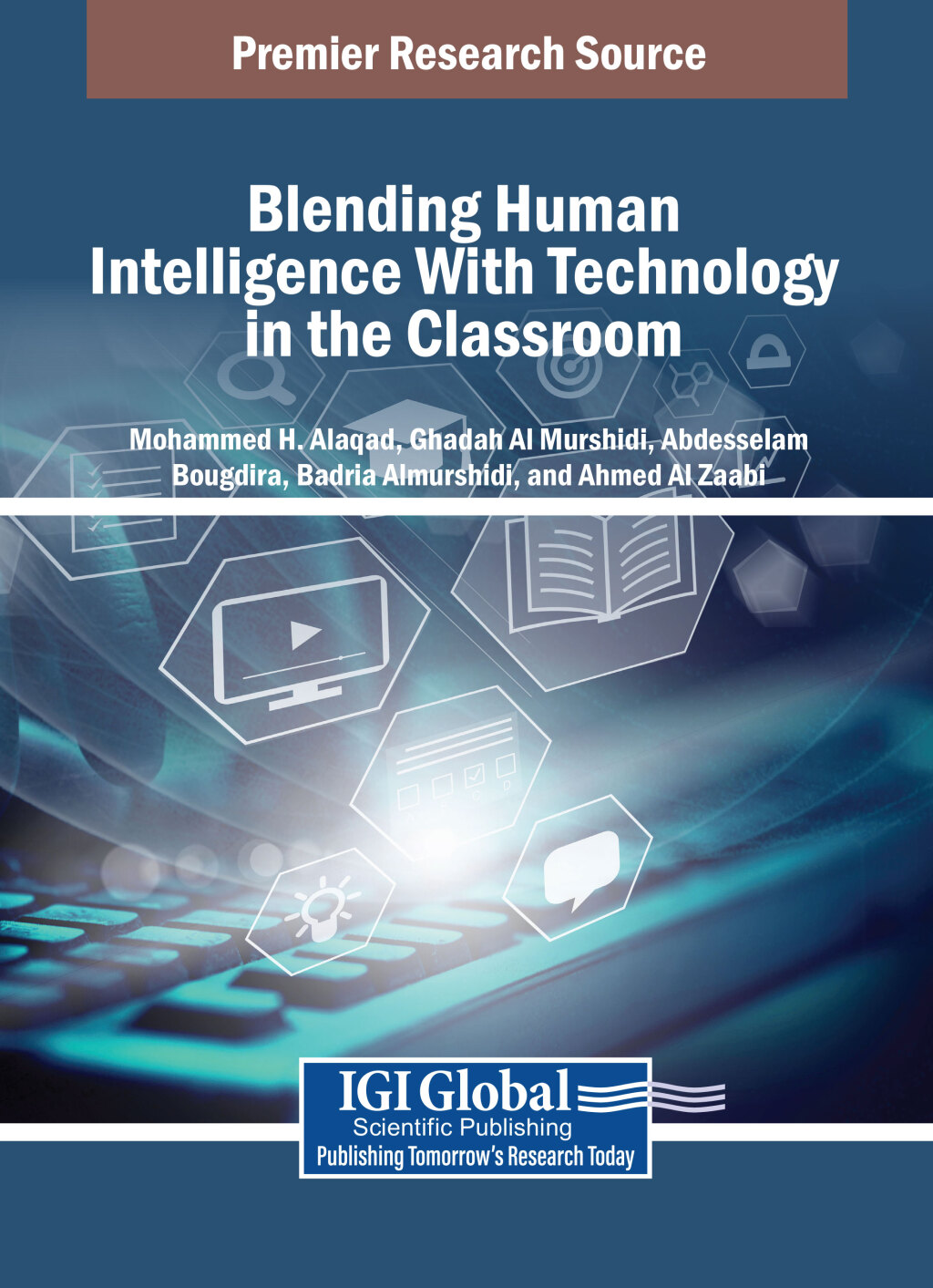
Blending Human Intelligence With Technology in the Classroom – PDF/EPUB Version Downloadable
Author(s): IGI Global
Publisher: Information Science Reference
ISBN: 9798337307718
Edition:
$49,99
Delivery: This can be downloaded Immediately after purchasing.
Version: Only PDF Version.
Compatible Devices: Can be read on any device (Kindle, NOOK, Android/IOS devices, Windows, MAC)
Quality: High Quality. No missing contents. Printable
Recommended Software: Check here

Important: No Access Code
Description
In recent years, the integration of artificial intelligence (AI) in education has rapidly transformed the traditional classroom, opening new possibilities for both teachers and students. AI-powered tools can enhance the classroom environment by offering personalized, adaptive learning experiences tailored to individual student needs. From automated grading systems and AI-driven tutoring to intelligent content recommendations and predictive analytics, AI empowers educators to optimize their teaching strategies and engage students in more meaningful ways. However, the growing presence of AI in classrooms also raises critical questions about the role of human educators and the ethical implications of machine-based learning. The future of education lies not in replacing teachers with machines, but in creating synergistic environments where technology amplifies human creativity, empathy, and instructional expertise. Blending Human Intelligence With Technology in the Classroom offers a comprehensive exploration of how AI technologies redefine teaching methodologies, reshape learning experiences, and challenge existing pedagogical models. It bridges the gap between human intelligence and machine-driven solutions, demonstrating how AI-powered tools can enhance the classroom environment by offering personalized, adaptive learning experiences tailored to individual student needs. Covering topics such as critical thinking, gamification, and human connections, this book is an excellent resource for educators, administrators, computer engineers, policymakers, researchers, academicians, and more.