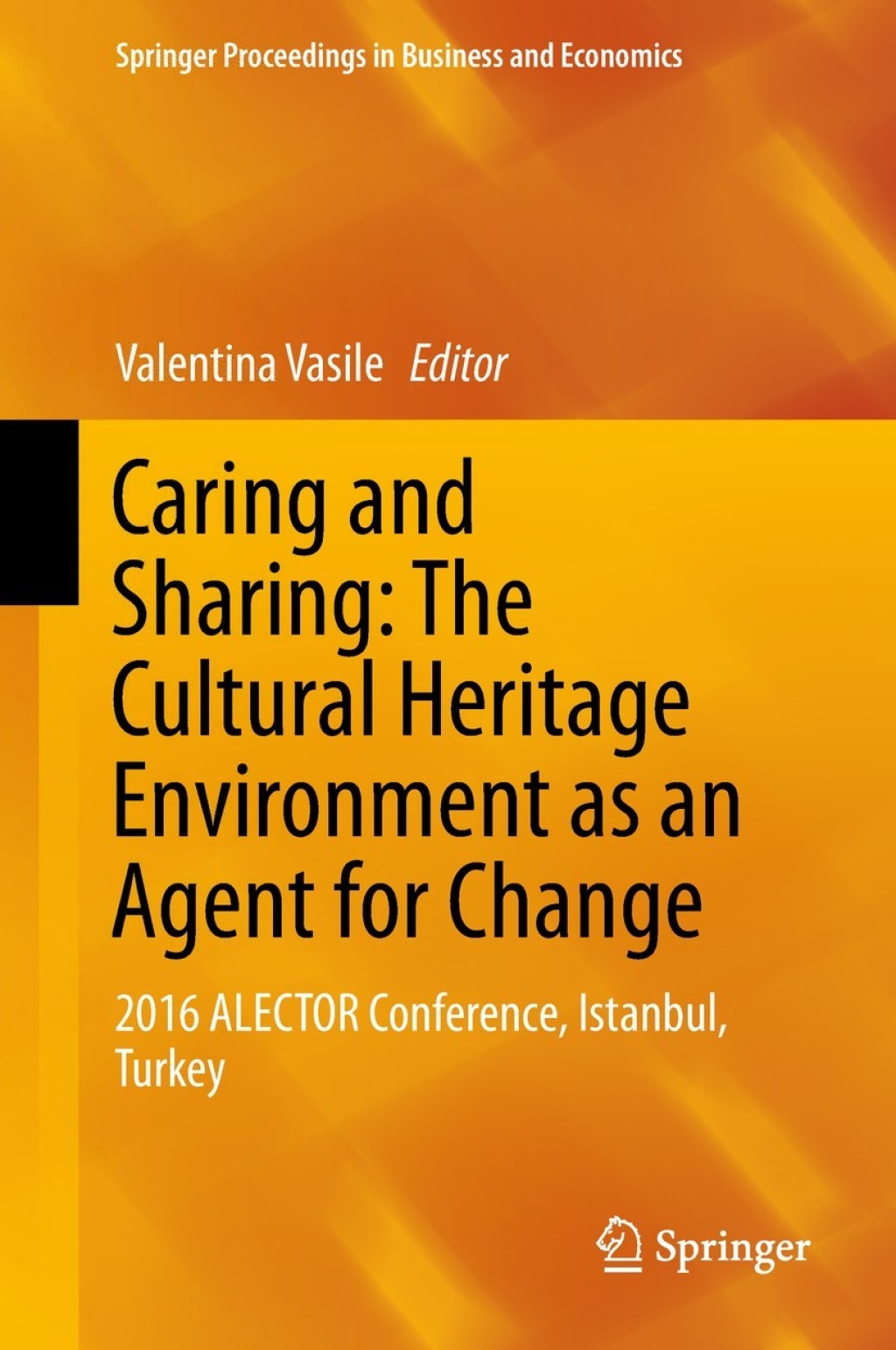
Caring and Sharing: The Cultural Heritage Environment as an Agent for Change 2016 ALECTOR Conference, Istanbul, Turkey – PDF/EPUB Version Downloadable
Author(s): Author
Publisher: Springer
ISBN: 9783319894676
Edition:
$49,99
Delivery: This can be downloaded Immediately after purchasing.
Version: Only PDF Version.
Compatible Devices: Can be read on any device (Kindle, NOOK, Android/IOS devices, Windows, MAC)
Quality: High Quality. No missing contents. Printable
Recommended Software: Check here

Important: No Access Code
Description
This proceedings volume explores the socio-economic dimension of the heritage sector from a broad, interdisciplinary perspective. Featuring contributions from the 2016 ALECTOR International Conference held in Istanbul, Turkey, this book presents current theoretical and empirical research related to such topics as: R&D and ICT in tourism; heritage products and services; climate change; finance and tourism; cultural communication; anthropological cultural heritage; and heritage management. Collectively, the papers presented in this book provides methodologies, strategies and applications to measure the socio-economic dimension of the heritage sector and also good practices in the heritage sector that drive regional, cultural and economic development and sustainability. The EU Neighbourhood Info Centre (ENPI) Cross-Border Cooperation (CBC) Black Sea project “Collaborative Networks of Multilevel Actors to Advance Quality Standards for Heritage Tourism at Cross BorderLevelâ€, or ALECTOR, focuses on different types of heritage assets as a means to invest in human capital and tourism innovation in order to achieve socio-economic development and cooperation with social partners in the Black Sea region. Featuring collaborations from Greece, Romania, Bulgaria, Moldova Ukraine, Georgia and Turkey, the project proposes a cognitive and educational framework for using a region’s assets, which would guide final beneficiaries (regions, communities, SMEs) to identify, signify, valorize and manage their natural and cultural resources, in order to use heritage potential as a vehicle for tourism. Presenting case studies of successful initiatives, the enclosed papers are divided into two parts: •  Part I: Economics of Heritage features innovative research results on the heritage and tourism topics from countries such as Bulgaria, Croatia, Russia, and Romania •  Part II: Best Practices features best practices, experiences, and promotion plans for cultural heritage through tourism from countries such as Bulgaria, Republic of Moldova, Turkey, Russia, and Romania