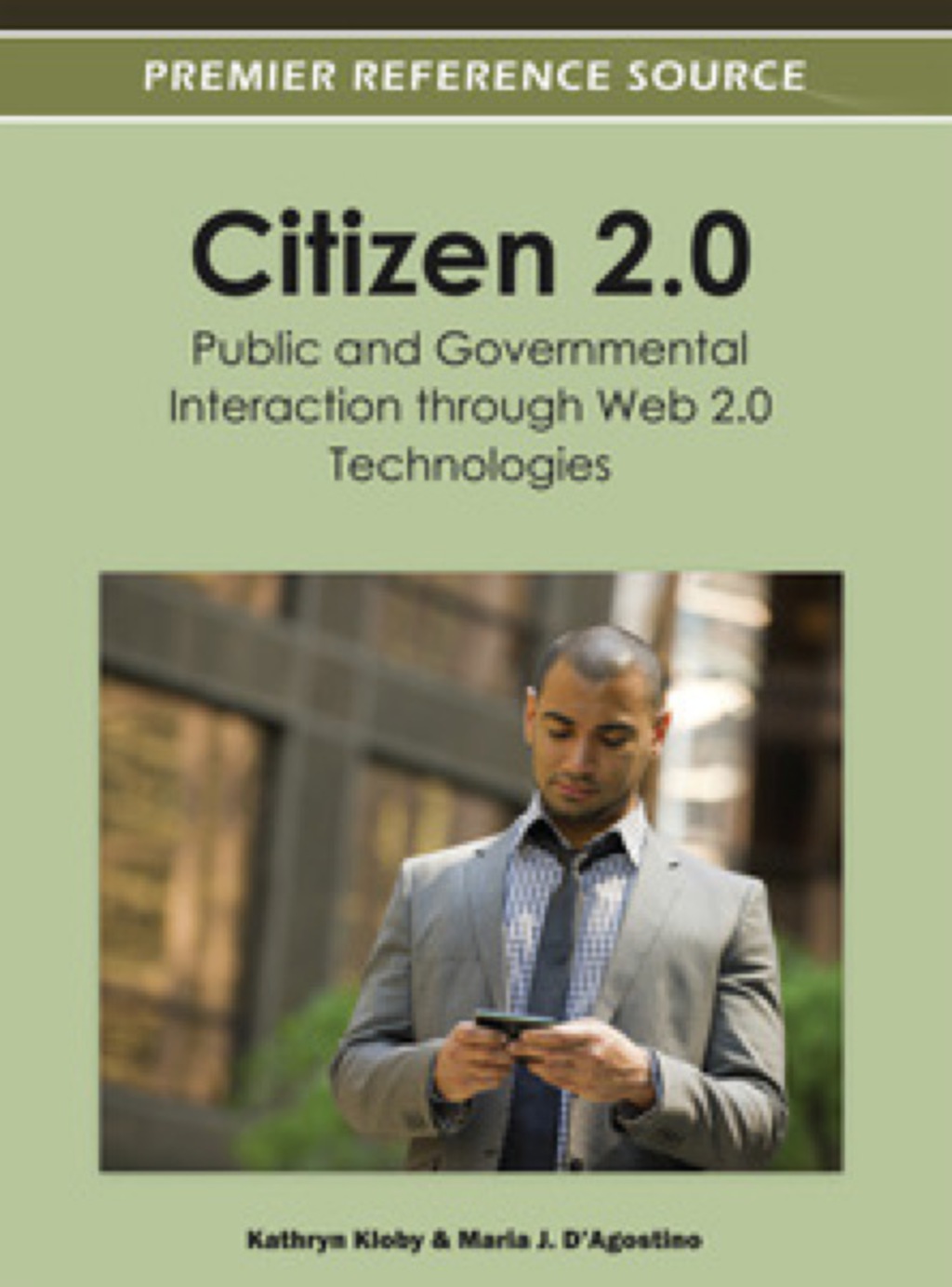
Citizen 2.0: Public and Governmental Interaction through Web 2.0 Technologies – PDF/EPUB Version Downloadable
Author(s): Kathryn Kloby
Publisher: Information Science Reference
ISBN: 9781466603189
Edition:
$49,99
Delivery: This can be downloaded Immediately after purchasing.
Version: Only PDF Version.
Compatible Devices: Can be read on any device (Kindle, NOOK, Android/IOS devices, Windows, MAC)
Quality: High Quality. No missing contents. Printable
Recommended Software: Check here

Important: No Access Code
Description
Generally speaking, Web 2.0 technologies support real-time or other innovative, Web-based social interactions, and they are increasingly popular among consumers, the private sector, and more recently, government. Citizen 2.0: Public and Governmental Interaction through Web 2.0 Technologies defines the role of Web 2.0 technologies in government and highlights a variety of strategies and tools public administrators can use to engage citizens. Chapters provide suggestions for adoption and implementation based on the lessons learned by scholars and practitioners in the field. More importantly, it will present an analysis of how Web 2.0 technology can transform government and explore how citizen expectations and preferences can be included in decision-making. The collection provides a vital resource for practitioners and academics to stay abreast of the latest research within the ever-burgeoning field.
Related products
Citizen 2.0 Public and Governmental Interaction through Web 2.0 Technologies – PDF/EPUB Version Downloadable
Author(s): Kathryn Kloby
Publisher: Information Science Reference
ISBN: 9781466603189
Edition:
$49,99
Delivery: This can be downloaded Immediately after purchasing.
Version: Only PDF Version.
Compatible Devices: Can be read on any device (Kindle, NOOK, Android/IOS devices, Windows, MAC)
Quality: High Quality. No missing contents. Printable
Recommended Software: Check here

Important: No Access Code
Description
Generally speaking, Web 2.0 technologies support real-time or other innovative, Web-based social interactions, and they are increasingly popular among consumers, the private sector, and more recently, government. Citizen 2.0: Public and Governmental Interaction through Web 2.0 Technologies defines the role of Web 2.0 technologies in government and highlights a variety of strategies and tools public administrators can use to engage citizens. Chapters provide suggestions for adoption and implementation based on the lessons learned by scholars and practitioners in the field. More importantly, it will present an analysis of how Web 2.0 technology can transform government and explore how citizen expectations and preferences can be included in decision-making. The collection provides a vital resource for practitioners and academics to stay abreast of the latest research within the ever-burgeoning field.