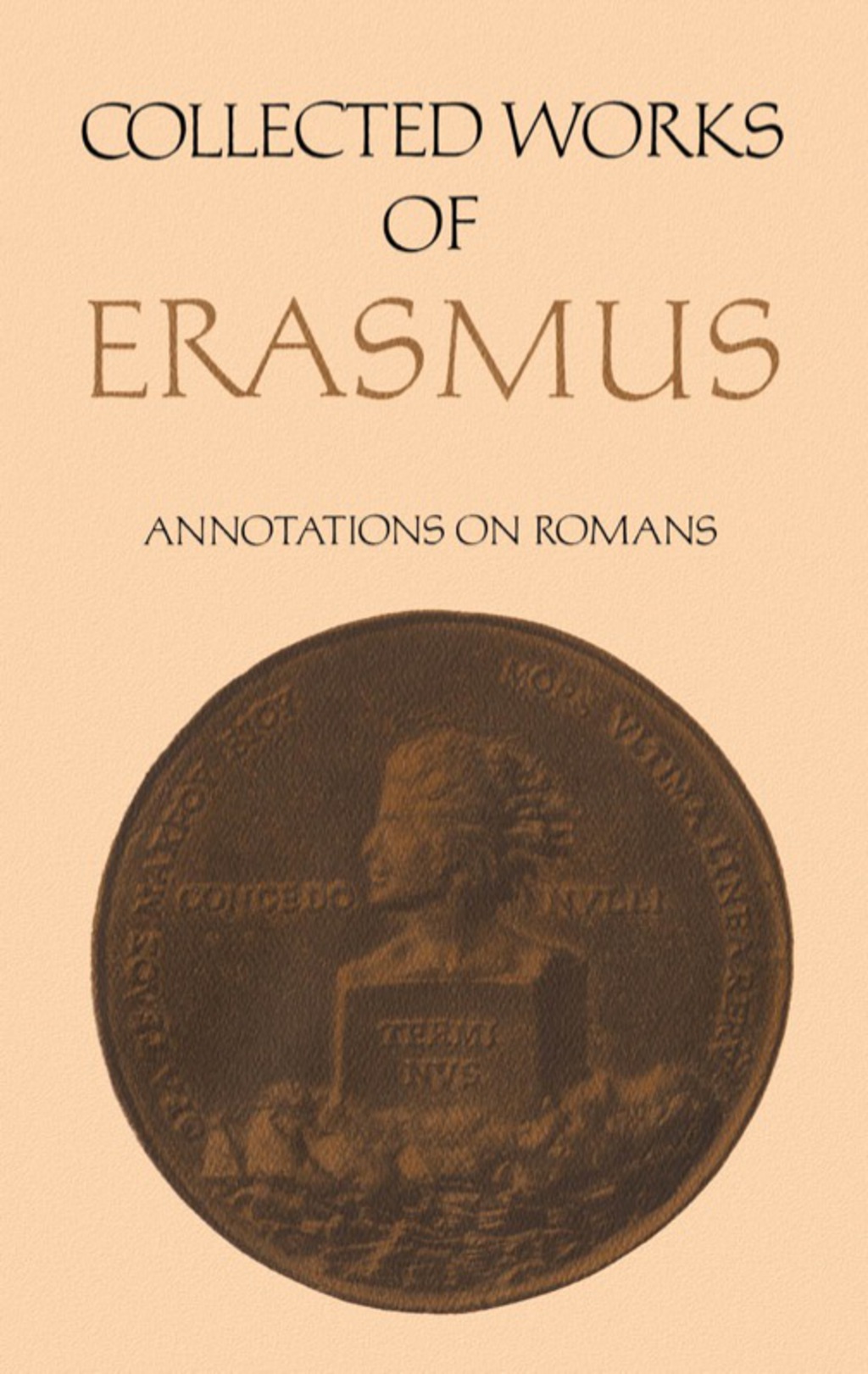
Collected Works of Erasmus Annotations on Romans, Volume 56 1st Edition – PDF/EPUB Version Downloadable
Author(s): Desiderius Erasmus
Publisher: University of Toronto Press
ISBN: 9780802028037
Edition: 1st Edition
$49,99
Delivery: This can be downloaded Immediately after purchasing.
Version: Only PDF Version.
Compatible Devices: Can be read on any device (Kindle, NOOK, Android/IOS devices, Windows, MAC)
Quality: High Quality. No missing contents. Printable
Recommended Software: Check here

Important: No Access Code
Description
The Annotations of Erasmus are designed for those who wish to take the study of the Bible seriously. Erasmus himself declared as much: his Annotations were not written, he implied, to provide pleasant diversions or popular entertainment. They were a work of genuine biblical scholarship. They brought to bear on theological issues of the day the light of Scripture interpreted from its own historical and literary contexts — often with disturbing clarity. They are, moreover, replete with that Erasmian irony that so effectively exposed the personal and institutional follies of all parties in the early years of the Reformation.
Erasmus wrote annotations on all the New Testament books, but among them all the annotations on Romans must hold a special place. The Epistle to the Romans has been understood as the classic theological statement by the Apostle to the gentiles of the terms on which Divine grace embraced all human beings. Besides, centuries of reflection have made Romans a focus of debate on central theological issues — for example, the relation of the Divine Persons, the predestination of the saints, the doctrine of justification. To such problems the sometimes tortured syntax of the Greek has often obscured the clarity sought from the divine Apostle. Erasmus understood that all discussion of Romans must rest upon a sure grasp of the author’s intent. His task, therefore, in the Annotations on Romans was to clarify the text of the Epistle, and so to illuminate the vision of Paul.
This translation reveals the annotations as a rich storehouse of methodological discussion and semantic analysis, and a fascinating witness to the theological debates of the early sixteenth century.
Volume 56 of the Collected Works of Erasmus series.