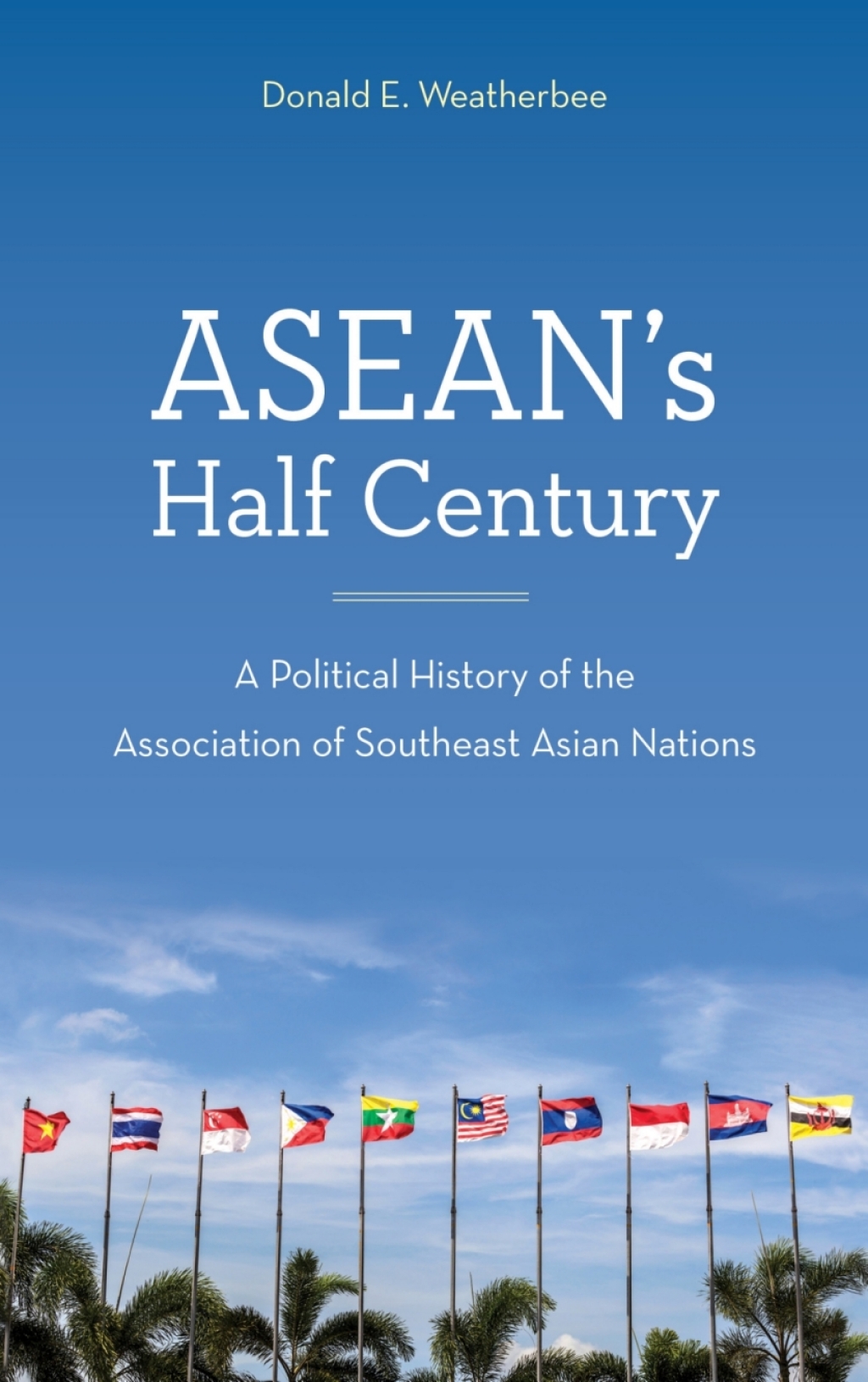
ASEAN’s Half Century A Political History of the Association of Southeast Asian Nations 1st Edition – PDF/EPUB Version Downloadable
Author(s): Donald E. Weatherbee
Publisher: Rowman & Littlefield Publishers
ISBN: 9781442272521
Edition: 1st Edition
$49,99
Delivery: This can be downloaded Immediately after purchasing.
Version: Only PDF Version.
Compatible Devices: Can be read on any device (Kindle, NOOK, Android/IOS devices, Windows, MAC)
Quality: High Quality. No missing contents. Printable
Recommended Software: Check here

Important: No Access Code
Description
This authoritative book provides a comprehensive political history of the Association of Southeast Asian Nations (ASEAN), the ten members of which are Brunei, Cambodia, Indonesia, Laos, Malaysia, Myanmar, the Philippines, Singapore, Thailand, and Vietnam. Leading scholar Donald E. Weatherbee follows ASEAN from its inception in 1967, when it was founded with the goal of promoting peace, stability, security, and economic growth in the region. Throughout, a basic assumption of its leaders has been that the achievement of the first three conditions is necessary for the fourth. Weatherbee traces ASEAN’s three reinventions: in 1976, it made security a primary Cold War interest; in 1992, it refocused on economic integration; in 2007, it adopted the ASEAN Charter, which was the legal basis for the establishment of the ASEAN Community in 2015. He shows how at each stage of its development, ASEAN has dealt at three levels of action: the regional international order; intra-ASEAN relations; and the spillover of the domestic politics of member states into regional relations, particularly on questions of democracy and human rights. ASEAN’s greatest contemporary political challenge is in adapting to the regional impact of the US–China rivalry, particularly over South China Sea issues. For ASEAN to maintain its claim to centrality as a driving force in the regional security architecture, the author argues, a fourth reinvention may be required. Dispelling the myths surrounding the organization’s achievements fifty years after its founding, this book will be invaluable for all readers interested in ASEAN’s role in the broader Asia-Pacific region.
Related products
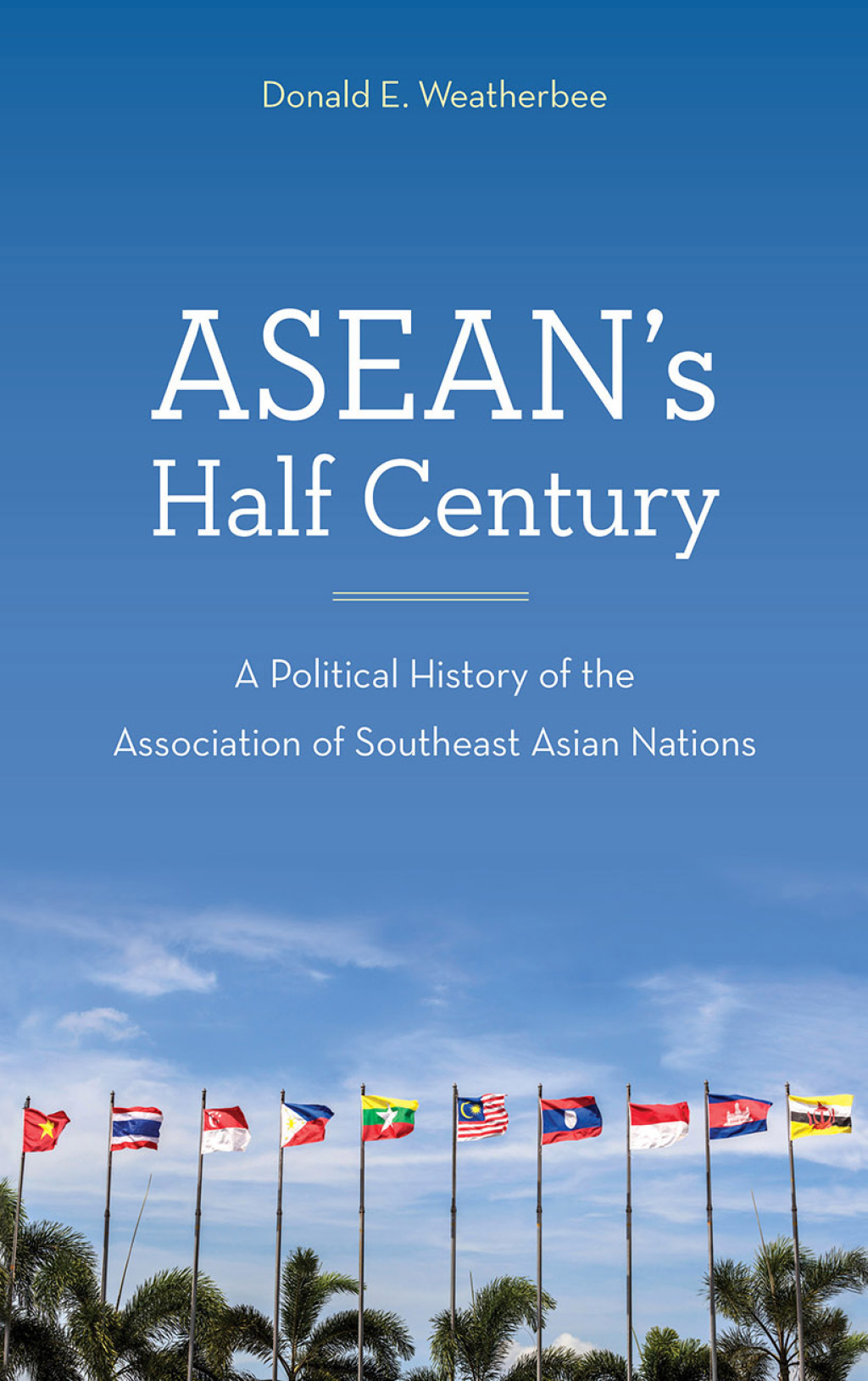
ASEAN’s Half Century A Political History of the Association of Southeast Asian Nations 1st Edition – PDF/EPUB Version Downloadable
Author(s): Donald E. Weatherbee
Publisher: Rowman & Littlefield Publishers
ISBN: 9781442272514
Edition: 1st Edition
$49,99
Delivery: This can be downloaded Immediately after purchasing.
Version: Only PDF Version.
Compatible Devices: Can be read on any device (Kindle, NOOK, Android/IOS devices, Windows, MAC)
Quality: High Quality. No missing contents. Printable
Recommended Software: Check here
Important: No Access Code
Description
This authoritative book provides a comprehensive political history of the Association of Southeast Asian Nations (ASEAN), the ten members of which are Brunei, Cambodia, Indonesia, Laos, Malaysia, Myanmar, the Philippines, Singapore, Thailand, and Vietnam. Leading scholar Donald E. Weatherbee follows ASEAN from its inception in 1967, when it was founded with the goal of promoting peace, stability, security, and economic growth in the region. Throughout, a basic assumption of its leaders has been that the achievement of the first three conditions is necessary for the fourth. Weatherbee traces ASEAN’s three reinventions: in 1976, it made security a primary Cold War interest; in 1992, it refocused on economic integration; in 2007, it adopted the ASEAN Charter, which was the legal basis for the establishment of the ASEAN Community in 2015. He shows how at each stage of its development, ASEAN has dealt at three levels of action: the regional international order; intra-ASEAN relations; and the spillover of the domestic politics of member states into regional relations, particularly on questions of democracy and human rights. ASEAN’s greatest contemporary political challenge is in adapting to the regional impact of the US–China rivalry, particularly over South China Sea issues. For ASEAN to maintain its claim to centrality as a driving force in the regional security architecture, the author argues, a fourth reinvention may be required. Dispelling the myths surrounding the organization’s achievements fifty years after its founding, this book will be invaluable for all readers interested in ASEAN’s role in the broader Asia-Pacific region.